Preventive Fire-System Maintenance Checklist for Facility Managers in Pampanga & Central Luzon
Preventive fire-system maintenance is not just a calendar reminder for the next service visit. For facility managers in Pampanga and Central Luzon, it is the control system that keeps alarms, pumps, sprinklers, extinguishers, emergency lights, and suppression equipment from becoming silent liabilities.
At North Point Safety, we connect installation, testing, commissioning, regular servicing, and Fire Safety Maintenance Report support. A fire protection system needs dependable records, access, repairs, and follow-up after turnover.
Create One Asset Register
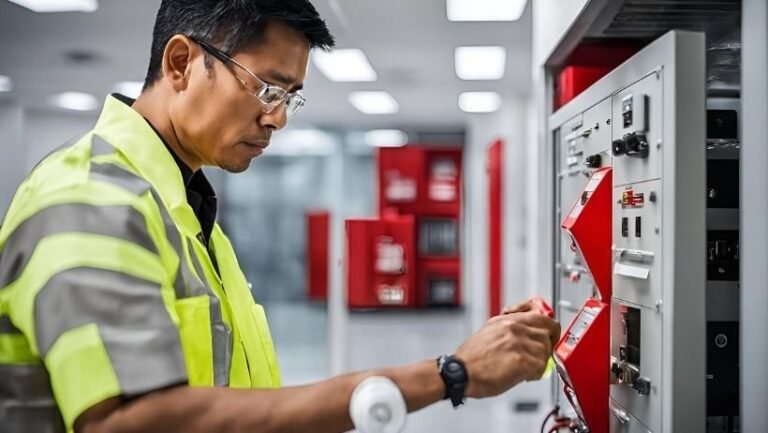
Start by listing every fire safety asset in one register. Do not rely on memory or old invoices. Walk the facility and record the actual equipment on site: FDAS panels, detectors, manual call points, sounders, strobes, fire extinguishers, emergency lights, exit signs, sprinkler valves, pumps, hose cabinets, kitchen hood equipment, clean-agent cylinders, control panels, and other connected devices.
For each item, capture the location, visible condition, tag or serial number when available, last service date, known issue, and responsible person. Include photos for equipment that is hard to describe. A clean register prevents the common failure where one room, tenant area, or old device is forgotten until inspection or an alarm condition exposes it.
Rank Maintenance By Failure Impact
Not every item carries the same immediate risk. Sort maintenance tasks by what happens if the item fails.
A trouble signal on the FDAS panel can affect alarm reliability. A weak fire pump battery or inaccessible valve can affect water-based protection. A blocked extinguisher may prevent first response. A failed emergency light can affect evacuation. A kitchen hood or FM-200 system with missing service documentation can create uncertainty in a high-value or high-risk area.
This ranking helps facility managers decide what needs urgent action, what can wait for a scheduled visit, and what should be watched during monthly internal rounds. It also helps avoid spending the whole budget on visible but lower-risk cosmetic fixes.
Check The Failure Modes People Usually Miss
Fire systems often degrade quietly. Dust builds up in detectors. Batteries age. Corrosion appears on fittings. Labels fall off. Staff silence panel alerts without reporting them. Renovation work blocks sprinkler coverage or changes airflow around detectors. Storage creeps into electrical rooms. Exit signs remain lit, but emergency backup performance is never tested by the owner.
During internal checks, look for patterns rather than one-off defects:
- Repeated false alarms from the same area
- Trouble signals that return after reset
- Fire extinguishers moved from assigned locations
- Sprinkler valves or cabinets blocked by stock
- Emergency lights damaged by ceiling work
- Pump rooms used for storage
- Kitchen hood nozzles affected by grease or layout changes
- FM-200 rooms with new penetrations, exhaust changes, or added equipment
These conditions are not all the same, but they share one problem: they can make a system less dependable without looking dramatic.
Protect Maintenance Access
Technicians cannot maintain what they cannot reach. Keep panel rooms, pump rooms, valve locations, hose cabinets, ceiling access points, and protected rooms accessible. If work requires coordination with tenants, security, mall administration, or production supervisors, schedule that coordination before the service day.
For Central Luzon facilities with mixed office, warehouse, retail, kitchen, and industrial spaces, access planning matters. A technician may need to inspect devices above ceilings, enter rented units, test alarms outside peak hours, or coordinate pump activity where noise or water discharge could disrupt operations. Good maintenance planning reduces surprise downtime.
Turn Every Service Visit Into A Record
A service visit should leave more than a signature. Ask for clear findings, corrected items, remaining deficiencies, recommended actions, test notes, parts replaced, and areas not accessed. Store the report with photos, invoices, device lists, and previous findings.
If a provider notes a deficiency, assign an owner and due date. A report that says “for correction” is not a maintenance plan until someone is responsible for closing it.
Inspection and servicing records should accurately reflect the condition of the systems. Keep unresolved findings visible until repairs are verified.
Review Changes After Renovations
Many maintenance problems begin after building changes. New partitions can block detector coverage. Storage racks can interfere with sprinklers. Kitchens may add cooking equipment under a hood. Server rooms can add cable penetrations or heat load. Tenants may cover signs, relocate extinguishers, or alter exit routes.
After any renovation, tenant turnover, equipment relocation, or layout change, ask whether fire safety systems still match the space. Do not wait for the annual inspection to discover that a system was designed for a room that no longer exists.
Teach Staff What To Report
Facility teams do not need to become fire engineers, but they do need to recognize basic warning signs. Guards, cleaners, reception staff, warehouse supervisors, and kitchen teams often see problems first.
Train them to report alarms, trouble lights, blocked equipment, damaged extinguishers, leaking pipes, missing signs, unusual pump room conditions, broken emergency lights, open panel doors, and any fire safety equipment moved during cleaning or renovation. Simple reporting habits close the gap between scheduled service visits.
Maintenance Checklist For Facility Managers
Use this working checklist:
- Update the asset register from an actual walkthrough.
- Rank issues by life safety, system reliability, and inspection risk.
- Keep fire safety equipment accessible and visible.
- Schedule service around tenant access and operating hours.
- Record every finding, correction, and unresolved deficiency.
- Review fire systems after renovations or layout changes.
- Train staff to report visible problems immediately.
- Keep reports, photos, and FSMR-related documents in one controlled file.
Get A Site-Specific Maintenance Plan
Generic maintenance reminders are better than nothing, but they do not account for building age, occupancy, equipment condition, humidity, dust, kitchen grease, electrical rooms, warehouse activity, or tenant changes. North Point Safety can assess the actual site, review service history, identify recurring weak points, and recommend a practical preventive maintenance plan for Pampanga and Central Luzon properties.
Request a free consultation or site visit before the system has already failed, the inspection deadline is near, or the records have become too messy to trust.
Arrange a Maintenance Assessment
Contact North Point Safety to discuss your facility. See our preventive maintenance services and FSMR preparation guide for related planning information.
This checklist supports facility planning. Technical inspection, testing, repairs, and impairment management should be handled by qualified personnel using the applicable system instructions and requirements.
FAQs
What is the first step in preventive fire-system maintenance? Build a current asset register from an actual walkthrough, then use it to track locations, condition, service dates, and unresolved issues.
Which systems should facility managers include? Include FDAS, extinguishers, sprinklers, fire pumps, hose cabinets, emergency lights, exit signs, kitchen hood systems, FM-200 systems, and related panels or controls.
Why do renovations affect maintenance? Partitions, storage racks, cabling, cooling changes, and tenant fit-outs can block devices, change room conditions, or make records inaccurate.
How should service reports be handled? Store reports with photos and deficiency notes, assign owners to unresolved items, and keep the file ready for FSMR or BFP preparation.